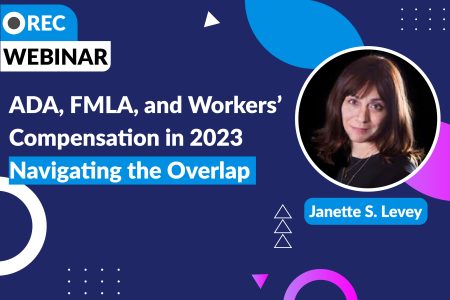
Description
RECORDED TRAINING COURSE
Few employers can say they have never faced challenges with employee medical leave, disability accommodation, or workplace injuries. The Family and Medical Leave Act (FMLA) provides eligible employees with up to 12 weeks of unpaid, job-protected leave for qualifying family and health conditions. The Americans with Disabilities Act (ADA) (and ADA Amendments Act) requires covered employers to provide reasonable accommodations — including leave when appropriate — for qualified individuals with disabilities. Workers’ compensation laws require medical care and wage benefits for employees injured on the job.
Often, an employee’s situation will trigger one, two, or all three of these laws at the same time — such as when a workplace injury also qualifies as a serious health condition and a disability. When this happens, employers must understand how to analyze each law separately, how they interact, and how to meet all compliance requirements without risking liability.
This webinar has been fully updated for 2026 compliance expectations and best practices to help HR and leadership proactively manage complex leave and accommodation situations with confidence.
Session Highlights:
In this 2026 edition of the webinar you will learn how to:
- Distinguish between a “serious health condition” under the FMLA and a “qualified individual with a disability” under the ADA/ADAAA.
- Understand when and how workers’ compensation leave may run concurrently with FMLA leave.
- Use medical inquiry and certification processes correctly under each law.
- Identify notification requirements under FMLA and ADA/ADAAA.
- Recognize situations where FMLA leave, ADA accommodation, and workers’ comp overlap.
- Manage intermittent or reduced-schedule leave requests.
- Handle termination or job restoration legally after leave under one or more laws.
- Apply documentation, interactive process, and reinstatement guidelines.
- Gain practical best practices for compliance in 2026.
Why You Should Attend:
These three seemingly separate bodies of law — FMLA, ADA/ADAAA, and Workers’ Compensation — often intersect in complex ways. Many employers struggle with questions such as:
- What qualifies as FMLA leave vs ADA reasonable accommodation vs workers’ compensation benefits?
- When must employers continue health benefits?
- Can you require fitness-for-duty or medical certifications, and how?
- How do multi-state compliance requirements affect your policies?
- Failure to manage these laws correctly can result in costly fines, discrimination claims, and other legal exposure. This webinar provides the tools and resources you need to navigate overlapping leave laws, reduce compliance risks, and protect your organization under current 2026 legal interpretations and workplace practices.
Who Should Attend:
This program is ideal for professionals responsible for employment compliance, leave administration, and workforce management, including:
- Business Owners;
- H.R. Managers and Directors;
- H.R. Generalists;
- Leave Administrators;
- Benefits Administrators;
- CEO’s;
- Senior Managers;
- Front-Line and Middle Managers.
- Risk & Benefits Specialists
- Small Business Employers
- Legal Counsel
- Chief Legal Officer
- Corporate Counsel
Note: You will get access to the Recording link and E-Transcript; in your account and at your registered email address.
 Janette Levey Frisch, Founder of The EmpLAWyerologist Firm, has over 20 years of legal experience, more than 10 of which she has spent in Employment Law. It was during her tenure as sole in-house counsel for a mid-size staffing company headquartered in Central New Jersey, with operations all over the continental US, that she truly developed her passion for Employment Law.